This guide contains the information you’ll need to understand and succeed with modern cloud data warehousing. It will start you on a path to transform your company’s data analytics with five key topics crucial to getting started.
If you want your business to be data-driven, you must first make an important decision about how to tap into your organization’s vast resources of raw data and how to turn this data into actionable business intelligence.
It can be hard to keep up with the rapidly changing business intelligence (BI) landscape. But it doesn't have to be.
Modern BI solutions can increase the value of big data exponentially by lowering the barrier to entry with user-friendly solutions.
This book outlines the factors that your organization should consider before rolling out embedded analytics.
This e-book gives manufacturers the tools to lead the Quality 4.0 transformation—a transformation that raises traditional manufacturing to the next level. It teaches readers to use advanced technology, analytics and IIoT to strengthen the manufacturing process and bring it forward into a powerful digital age.
This white paper from Navigant Research, sponsored by SAS and Intel, explores the analytics infrastructure that utilities need to prepare for and benefit from the growth of electric vehicles.
Learn how automakers and their partners are using IoT data and analytics to help them reshape business models, seize new sources of revenue, and develop inventive ways to better serve customers.
Read this research summary from the International Institute for Analytics to get started. You’ll learn how to use analytics to gain advanced insight from the Internet of Things: tracking chips, in-store infrared traffic monitors, interactive kiosks and customer mobile devices, to name a few.
Download the 2018 Gartner Magic Quadrant for Data Integration Tools Report to find out!
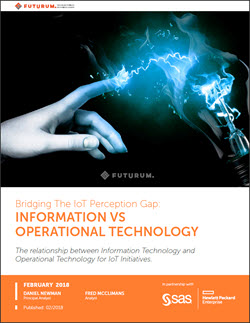
The ability to gather data from sensors embedded throughout an enterprise can drive insights and operational efficiencies from the supply chain to the customer. But IoT and Industrial IoT (IIoT) implementations require high degrees of IT/OT convergence—collaboration and integration between information technology and operational technology groups—to succeed.
This A-to-Z guide includes 101 common terms related to the Internet of Things.
Download this e-book to discover how your organization can tap the power of massive amounts of data conveniently and affordably to enhance efficiency and transform raw data into valuable business intel.
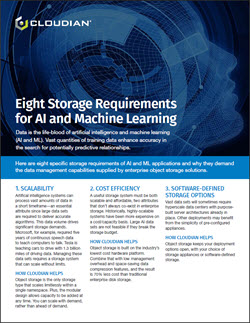
Eight specific storage requirements of AI and ML applications and why they demand the data management capabilities supplied by enterprise object storage solutions.
This white paper explores the features that make GPU databases ideal for BI and incorporates real-world use cases from actual customer implementations.
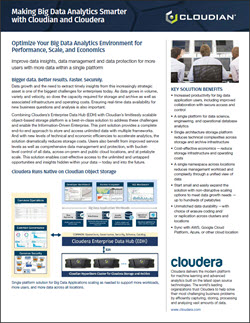
As data grows in volume, variety, and velocity, so does the capacity required for storage and archive as well as associated infrastructure and operating costs.
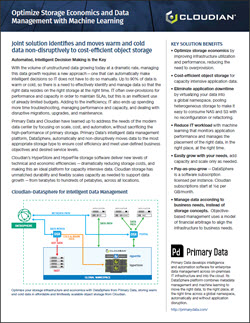
With unstructured data growing today at a dramatic rate, managing it requires a new approach—one that can automatically make intelligent decisions so IT does not have to do so manually.
Download this book to understand how change data capture (CDC) technology works, why CDC is needed, and what your peers have learned from their CDC implementations.
Avoid the unnecessary parts of ETL to maintain data integrity and achieve faster time to value for your analytics initiatives.
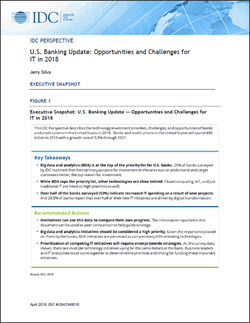
This IDC Perspective describes the technology investment priorities, challenges, and opportunities of banks and credit unions in the United States in 2018.
The only way to bring order to this chaotic environment is to employ a comprehensive hybrid cloud strategy that provides data management capability across cloud, multicloud, and on-premises infrastructure.
Finally, we can move beyond the conflict between data warehouse and data lake! It’s no longer one vs. the other but, rather, how these two concepts can complement one another for the benefit of both business and IT.
Banks consider big data analytics a competitively differentiating technology.
In today’s hybrid and multicloud environments, forward-looking organizations are deploying global data management platforms that span hybrid cloud architectures.
This report explores a leading approach to data governance and the impact it can have on today’s most data-rich organizations.
The end-to-end information capabilities of IBM Information Server let you better understand data and cleanse, monitor, transform and deliver it. Information Server can uniquely support the flexibility, performance, and scalability required to succeed with projects of any size.
By leveraging the comprehensive capabilities in Information Governance Catalog, you are better able to align IT with your business goals.

This major U.S. airline chose StreamAnalytix in a bid to efficiently manage, analyze, and draw actionable real-time insight from its continuously growing and complex customer and operational data.
In this e-book, we’ll explore common myths and misconceptions about moving from traditional to modern BI.
Enterprises today need a streaming analytics platform that can filter, aggregate, enrich, analyze, and visualize high-velocity data from multiple disparate live data sources in any data format and unify this insight with data from batch sources.
If you are a developer or data scientist interested in big data, learn why Spark may be the tool for you. Databricks is happy to present this e-book as a practical introduction to Spark.

Nik Rouda discusses how Cloudera complements popular cloud services, such as Amazon Web Services (AWS) and Microsoft Azure, and offers the unified platform to organize, process, analyze, and store data at large scale...anywhere.
The companies seeing the greatest value from IoT are the best at dealing with how products are performing for customers.
Your data platform choice will ultimately determine the success of all your business and operational goals related to insights.
Organizations today rely on survey research to gather much-needed business intelligence. This white paper discusses survey research as a seven-step process, detailing how to maximize your efforts every step of the way.
Using IBM SPSS Statistics and R together makes the most of both worlds.
This paper presents some points you should consider if you use, or plan to use, a spreadsheet to perform statistical analysis.
The purpose of this paper is to demonstrate the benefits of using the R programming language with IBM SPSS Statistics and Modeler software rather than simply trying to go it alone with R.
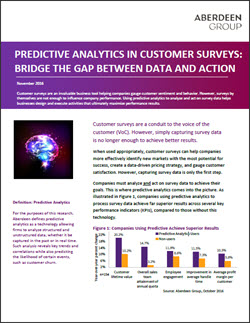
Customer surveys are an invaluable business tool for gauging customer sentiment and behavior. Using predictive analytics to analyze and act on survey data helps businesses design and execute activities that ultimately maximize performance results.
Organizations often lack two critical capabilities when it comes to making the right decisions for the business: the ability to make accurate predictions about the future, and to then use those predicted insights in conjunction with organizational goals to identify the best possible actions they should take.
Data exploration and analysis is a repetitive, iterative process, but in order to meet business demands, data scientists do not always have the luxury of long development cycles. What if data scientists could answer bigger and tougher questions faster?
The more data you have, the better the quality of your reports and strategic recommendations, right? Sure…if you can analyze that data intelligently and quickly, and make it actionable with valuable insights.
With predictive analytics, the enterprise learns from its cumulative experience (data), and takes action to apply what's been learned.
In the domain of data science, solving problems and answering questions through data analysis is standard practice. Often, data scientists construct a model to predict outcomes or discover underlying patterns, with the goal of gaining insights.
Honda's process for gathering customer feedback about issues and classifying this information was extremely time consuming as individuals had to read and classify each message, which averages about 310,000 messages per month in Japan alone. So Honda worked with IBM to implement a cognitive solution using IBM Watson Explorer to help extract and classify the incoming feedback.
Financial services firms are facing a new set of challenges and risks. In an increasingly global, mobile, and connected world, customers expect the companies with which they do business to leverage Big Data, analytics, mobile, cloud, and other technologies to improve the customer experience.
This report helps enterprise architecture (EA) professionals make the right choice when requirements are skewed to the needs of information workers who need to create, collaborate on, share, and find enterprise content.
This document outlines how best-in-class firms use efficient content processes to achieve higher levels of customer-centricity.